Since our launch in 2008, we've managed to attract a bit of attention from both within the industry and outside it. We're not big on tooting our own horn -- at least in public -- but if you're looking for that sort of thing, you've come to the right place.
-
Jingle Punks Music Completes Substantial Equity Financing and Establishes Strategic Advisory Board
NEW YORK, May 24 /PRNewswire/ -- Jingle Punks Music LLC, a built-for-purpose music publishing and technology company founded in August, 2008 by Jared Gutstadt and Dan Demole, announced today that it has completed a substantial equity financing. The financing was sponsored by Hammerline Capital, a New York based private equity investment company, and includes veterans from the music and technology industries. Proceeds from the transaction will help fund new product development, strategic content partnerships, and continued international expansion. Specific terms of the transaction were not disclosed.
Jingle Punks is the fastest growing resource for indie, production, and high-quality custom music in the United States and is currently providing music for use in television, film, advertising, and interactive to clients across the media and entertainment industries. The company's unique library search technology, in-house production capabilities, and growing network of composers are changing the way content creators discover and license music.
"Our last year of business was all about becoming a profitable and stable company," said Jared Gutstadt, CEO of Jingle Punks. "With this new financing, we are in a place to do the heavy lifting for some long-term strategic partnerships we are currently exploring with some huge and game-changing brands. We plan to announce several of these deals within the next twelve months."
The Company also announced that it has established a strategic advisory board that includes Steve Kofsky of New Remote Publishing and Spencer Hyman, strategy consultant and former COO of Last.FM. Mr. Hyman, who is also an investor in Jingle Punks, said, "I got the same goose bumps about this company as I did when I first encountered Last.FM. To me, the Jingle Punks approach represents the future of music discovery and music licensing."
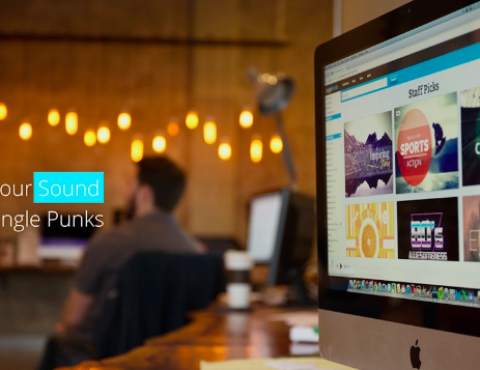
Since 2008, co-founders Jared Gutstadt (a.k.a. "Jingle Jared") and Dan Demole (CTO) have shared a vision for a different kind of music licensing company, one that leveraged unique technology to address the needs of music supervisors and fostered a culture focused on creating opportunities for unsung composers and independent musicians. The Jingle Player, the company's intuitive search technology, relies on a two-pronged approach to categorizing music: proprietary software and human tagging. Each song is meticulously analyzed and tagged based not only on its sound and musical makeup, but also on how it fits into media content for end use. The Player's relational database allows content creators across all forms of media to search for their production music needs using musical and non-musical terms, in the same way that people think and talk about music.
In a recent article, CNN said, "The company's proprietary search engine, the Jingle Player, allows users to enter the vaguest sonic parameters -- 'sounds like I'm in Starbucks' -- and get results from a database containing the works of roughly 300 professional musicians." This smart technology, a selectively curated library of fresh indie content and real-time, cost-effective custom music services, defines the Jingle Punks model, one that is becoming the end-to-end music licensing solution for the media industry's elite.
According to MTV producer Ron Cohen, with Jingle Punks "we no longer must choose from middling to mediocre music or recycle tracks heard everywhere." Cohen uses a substantial selection from Jingle Punks on every show and relies on its proprietary search engine to help him find music that stands out. "It seems ubiquitous. Each show I walk into now references Jingle Punks," he explains.
Since its inception, Jingle Punks has garnered frequent media coverage, including CNN, Billboard, Brazil's PEGN and Variety, and was named "one of America's most promising start ups" by Business Week. At the 2010 South by Southwest (SXSW) Music, Film & Interactive Festival, Pepsi and SoundCtrl acknowledged Jingle Punks as a leading innovator in the music technology industry. Jingle Punks has created a unique brand, which is highlighted by Jingle Jared's numerous industry conference appearances and Apple Store seminars, where he leads discussions about how technology can help turn anyone with musical ambition into a member of the Jingle Punks Army. The company's distinct approach to marketing is represented by The Jingle Guy, who is becoming a frequent guest at music and cultural events, where he is seen promoting the Jingle Punks brand and whose sole purpose in life is to rid the world of bad production music.
original story
-
Establishing hipster cred on an indie budget
By Justin Shady
When the first "Shrek" trailer hit theaters in 2000, it contained a cover of the Monkees' popular hit "I'm a Believer" performed by the triple-platinum pop rock group Smash Mouth. Nearly a decade later, the trailer for the fourth installment of the franchise, "Shrek Forever After," contains the cover of another song: Maxine Nightingale's disco-era hit "Right Back Where We Started From." But this time around Smash Mouth is nowhere to be found. Instead, DreamWorks went with the sounds of indie rockers Army Navy, a California band that came to the game armed only with a MySpace page. The use of lesser-known indie tracks in film trailers is currently a hot trend. When Arcade Fire's "Wake Up" showed up in the trailer for "Where the Wild Things Are" last year, it not only garnered interest from the band's dedicated followers, but it also imbued the promo with an alt rock sensibility. Karen O of the Yeah Yeah Yeahs scored the film's soundtrack with an assist from Coen brothers' composer Carter Burwell, solidifying the pic's indie cred.
Jared Gutstadt, CEO of the Gotham-based audio library Jingle Punks, recognizes these trends. "People are taking a lot of risks in trailers right now," he explains. "You don't necessarily hear the big-ticket songs you used to: bands like Coldplay or U2. Now we're hearing quirkier bands as opposed to the tried-and-true songs we've heard a million times before like 'Walking on Sunshine.'?" Started in August 2008, Jingle Punks is one of the fastest growing indie music databases for production use in the country. It houses more than 15,000 tracks of aggregated music from numerous unsigned acts all over the world, as well as 6,000 tracks of original compositions created in-house. This gives studios the option to use music that could potentially label them as trendsetters rather than relying on the status quo of the radio dial.
"Content creators can now become tastemakers," says Gutstadt. "They can have a stake in discovering new bands and, in the process, become ground zero for breaking an act that no one's ever heard before." And the use of music from bands like Army Navy is beneficial to a studio's pocketbook. The hefty price tag that comes with the use of one Coldplay or U2 song can instead be used on numerous songs from smaller bands, giving them exposure they might not have otherwise received. "As more and more content is being created, the margin of profit is getting smaller," says Gutstadt, "and sometimes that means lower price points and lower budgets for projects. Our clients get some cool credibility and also end up saving a little bit of money."
original story
-
Jingle Punks looks to repeat U.S. success in Canada
By Toby Saltzman
When South by Southwest (SWXW) wound up in Austin, Tex., in March, Jingle Punks took home the coveted Pepsi Co & Soundtcrl Award for "the premium music licensing company for traditional and innovative properties."
Following on the heels of winning the Soundctrl Award for "outstanding achievement in music and technology," such recognition asserted the viability of the young company that revolutionized the way film, TV and marketing production companies access music, from classical to indie pop. To hear Jingle Punks' cofounders Jared Gutstadt, the 32-year-old chief executive, and Dan Demole, the 30-year-old chief technical officer, describe how their concept sprouted from frustration with existing technology to help them find suitable music is to sense the exuberance that underscores their creativity and marketing gumption.
Mr. Gutstadt and Mr. Demole met at a Brooklyn concert in August 2008. They soon discovered their shared passions for music and technology. Mr. Gutstadt said he was "bored with available music selections based on old hype," wished to "make life easier for editors who use music" and "needed a tool that specifically caters to the production community." Mr. Demole said he would love to create it. Their partnership began the next day.
Both had gravitated to New York to launch their careers. Mr. Gutstadt, a Torontonian with a master's degree in interactive telecommunications, was editing TV shows, films and music for Viacom, while trying to make it as a rock star by night. Mr. Demole, a Floridian with a computer sciences degree, had created cutting-edge video games for several companies, as well as national relational databases for banks and military contractors.
When they met, Mr. Demole was developing a profile as a fashion photographer with clients including Lacoste and DKNY. It was Mr. Gutstadt who conceptualized what they built into the Jingle Player. "The user experience evolved organically after we met with people inside the industry to learn what they wanted. It had to be fluid, seamless, simple and effective," Mr. Demole said.
Timing was crucial as they worked on a shoestring budget, using music from indie musicians. "We gave ourselves four months to succeed or return to day jobs," Mr. Gutstadt said. "Others have spent from $1-million to $20-million trying to produce this type of product. Our set-up cost was US$40,000. That covered our sweat equity; legal fees to develop policies and artists' contracts; and freelancers to help us analyze music according to our 'rule book.'
"Being able to describe music using non-musical terms, or names of popular TV shows, famous film directors or cultural references, takes the guesswork out of music supervision," he said about how the Jingle Player works. "For example: A film editor needing light, acoustic music that evokes a cafe scene can type in Starbucks. To get music appropriate for a scene of a long walk on the beach, he can type in 'long walk on the beach.' "
In December 2008, Mr. Demole and Mr. Gutstadt took their technology to Mr. Gutstadt's former editing clients -- MTV, VH1, Comedy Central, History Channel and Food Network -- hoping to bring them on as clients. "They liked our new technology, plus they saw it a bridge between their technology departments and indie musicians who had let us use their music in this trial period," Mr. Gutstadt said.
Jingle Punks' success was like a rolling stone amassing moss: Secondyear earnings were six times the first and new clients included AE, History Channel, film production companies, ad agencies, and "just about every American network."
"We initially tried to break into the U.S. and Canadian markets simultaneously, but because Canada is a smaller music production community, it was easier to start in the U.S.... We are in a trial phase with CTV, MTV Canada and Much Music," Mr.Gutstadt said. Jingle Punks was also gaining a reputation as a savvy aggregator of indie music for production use or, as Mr. Gutstadt said: "A hybrid between a pop music library of the best indie music and music supervisions.
"We created technology to aggregate fresh music content into a central database and became the voice of unheard, unsigned composers, musicians and bands. They could send their music cold to agents or producers hoping it gets noticed, or send it to us. We would expose it for placement in movies, TV shows, commercials and video games."
The way it works is artists upload music to jinglepunks.com,where clients can download it. Ron Cohen, producer of MTV's 16 and Pregnant, expressed relief he "no longer must choose from middling to mediocre music or recycle tracks heard everywhere." He said he uses a good selection from Jingle Punks on every show and the search engine helps him find music that stands out. "It seems ubiquitous. Each show I walk into now references Jingle Punks," he said.
The History Channel team also searches Jingle Punks for the perfect score, or collaborates with Mr. Gutstadt to tailor cover tunes by making "familiar music sound new," said Krista Liney, creative director of marketing for HC, citing its show Madhouse as an example. "They contemporized a Johnny Cash piece, picked up the tempo to fit the show. For a Creedence Clearwater Revival retro scene, Jared brought in a Southern gospel choir. When music complements the show, the message sticks in someone's head. That's beautiful, especially when you are marketing it."
The recent recession wasn't a setback for Jingle Punks, the co-founders said, rather cutbacks and layoffs in the entertainment industry allowed it to expand staff to 12. However, they credit two smart executive recruits for revving up success from the start: Ethan Goldman networks and recruits bands, musicians and composers for the Jingle Army; and music manager Anthony Martini forges business partnerships, creates awareness of the Jingle Punks brand among industry gatekeepers, and facilitates public appearances, such as its recent mentoring seminar at SXSW, and upcoming speaking engagements at this month's ASCAP Music Expo in Los Angeles, and the June Billboard Music & Advertising Conference in New York.
It also uses grassroots marketing, with Mr. Gutstadt regularly travelling between New York and Los Angeles to sell the player. And then there is Jingle Guy, pictured, the huge blue mascot. His mission -- besides spreading good vibes and creating a brand image at SXSW -- is to rid the world of bad production music. Fresh off their win at SXSW and landing their first film trailer for the new Jessica Alba film, Invisible Sign of My Own, the pair agree: "It's been an amazing run."
original story
-
Jingle Punks video segment on CNN Money
Jingle Punks recruits unsigned musicians and help them get commercial success in a challenging industry.
Watch the Video
-
"A fresh (and cheap!) sound for TV soundtracks" says CNN
By Matt Roshkow
Like many aspiring rock stars, Jared Gutstadt, 32, used to split his life in half. He held down a day job editing television shows for clients like Disney, MTV and VH1. He kept his nights free for what he really wanted to do: make music.
That changed two years ago, while Gutstadt was editing an independent film that needed a song with a Pulp Fiction-like vibe. After hours spent trying to find the right sound, he was left with two options. He could keep wading through stock libraries of tunes, a time-consuming process that was unlikely to yield anything edgy or exciting. Or he could seek out a popular track, facing the heavy fees associated with established recording artists.
Then came his "eureka" moment: Why not create a common-sense search engine, one that would use pop culture referents and simple adjectives like "dark" or "retro" to help film and television producers find the right songs? And what if those tracks were affordable, interesting songs from emerging artists?
"I realized if we could develop a system which aggregated and organized music in this way, the user experience would end up being far superior to any other system for production music," Gutstadt said. And so Jingle Punks was born.
Gutstadt co-founded the company in August 2008 with programmer Dan Demole, 30, whom he'd met and bonded with at a Black Keys concert. The pair bootstrapped themselves to the tune of $50,000 and quickly lined up their first client: Sunset Lane Entertainment, which produced the first-ever YouTube Live webcast. Today their growing roster of customers includes the History Channel, YouTube, Animal Planet, TV Land, The Food Network and Bravo.
Gutstadt wouldn't disclose the company's exact revenues, but said they've doubled each quarter since Jingle Punks got started. Some clients pay as little as $100 to use a single tune in a Web broadcast. Others shell out as much as $50,000 to license music for a full season of a television series.
Jingle Punks isn't alone in the market. Other licensing services, such as You License and Pump Audio, are also aggregating independent music for television and film.
But Jingle Punks stands out from the pack, according David Weiss, co-founder and editor of SonicScoop.com, a news site devoted to music and sound production. Jingle Punks offers a "much more efficient way to deliver the goods," a "more intuitive" method that speaks the language of musicians and music supervisors, he says.
The company's proprietary search engine, the Jingle Player, lets users enter the vaguest sonic parameters -- "sounds like I'm in Starbucks" -- and get results pulled from a database containing the works of roughly 300 professional musicians.
Jingle Punks recently supplied all the music for the second season of Bravo's top-rated "Real Housewives of Atlanta." According to the show's executive producer, Lauren Eskelin, Gutstadt delivered on his promise: dynamic new music.
"Other music libraries, you hear their stuff on other networks over and over again," Eskelin said. "We were looking for a new sound this season, and he bent over backwards to put together some great stuff."
Gutstadt hopes to eventually expand his database with music from major record labels. He'd like to see Jingle Punks become "the iTunes-meets-Pandora" of music licensing.
Not bad for a day job.
original story
-
Jingle Punks lands in Billboard
Sometimes it's best to not speak up. "The No. 1 thing when you're submitting music for consideration in these types of placements is to always make sure you have versions of your song with and without vocals to give the editors options when they're cutting. Sometimes when there's dialogue going on, they want to be able to do a sound up - and they also want to be able to pull it back."
Network at the and beyond. "Reach out to as many independent music supervisors and supervisors at networks as possible. When you're sending along a package you should always make it easy them to understand which type of show you feel your music would work well in."
"Project Runway" doesn't want death metal. "You should know the format you're going after. When you watch 'Project Runway' or reality shows, you'll see that they don't want fully fleshed-out songs. They're after ideas that bring a vibe out of a scene. Someone might make something that sounds like a Lady Gaga track, but it's really a simple drum beat with a bassline. If you want placement in shows, you've got to stay current with trends. Right now there's a big push in the music supervision world where everyone wants things that sound like Passion Pit and MGMT."
World music is an underserved market. "If you create a nice palette of music to get into shows, I would say look to the world music marketplace. When there's a challenge that takes place in different parts of the world, or they're visiting somewhere, having music that fits that vibe is great. If they're visiting Mexico, having some authentic Mexican folk music...would make it more attractive for the end use to put in a show."
-
Jingle Punks Jumps into Brazil
a few weeks back a writer from Brazil asked to do a story on Jingle Punks Music for a magazine called PEGN, which is akin to the Business Week of Brazil. Little did we know this story was going to be epic and feature pictures of Dan and I jumping through the air like David Lee Roth and Sammy Hagar on crack. Since the article is in Portuguese, we won't post it here, but the full article is available for download here if you're interested.
-
Jingle Punks "Hits the Ground Running" in Variety
By Carson Vaughan
Companies like You License, Musync and Pump Audio have built hype off claims of having streamlined the music licensing process. The pitch: Indie musicians gain access to content producers, and content producers gain easy exposure to new talent. "There are no music clearance worries or delivery issues -- it's all there with a click of the mouse," says 30-year-old CTO Dan Demole, co-founder of Jingle Punks. "We're able to bridge the gap between the mindless stock music that other libraries provide and the expensive sync costs of major music acts."
If Jingle Punks, established a year ago, is the latest startup to boast that they've modernized the music licensing business, what might set them apart is a client list with some of the industry's biggest players. "I told Dan if we started a library geared toward youth-oriented networks, things would happen," says Jared Gutstadt, Jingle Punks co-founder and CEO. "Our first day was Aug. 10 of last year -- we had the Food Network by October."
ABC, A&E, the History Channel, IFC, Bravo, Animal Planet, TV Land, E!, Starz and others were quick to follow. MTV Networks and NBC Universal's Bravo channel both signed on within the last month. "Like all good inventions, it was just luck and circumstance," Gutstadt says.
Jingle Punks works by allowing any artists without a publishing deal to submit music on its website free of charge. If Gutstadt, 31, a musician and former Viacom editor, approves it, the artist's music is added to the online Jingle Player library, where it is cleared for use in TV shows, advertisements or other mediums by any of Jingle Punks' registered users. "We don't play favorites based on who's hot," Gutstadt says. "Certain things that work in mainstream radio don't necessarily translate to mainstream television. One of the questions we always ask is, 'Is this a genre that has ever been used in a show before?' "
Unlike You License, a competitor that allows any musician to upload music to its library, Jingle Punks employs a screening process. Although rejected applicants may resubmit new music following a three-month waiting period, not everyone will make the cut. "The most important thing is sonic quality," Gutstadt says. "We're not going to accept something recorded in a tin can -- unless it's supposed to be ironic or funny."
Unlike regular stock libraries, Jingle Punks allows the client to search its online database not only by genre, subgenre and tempo, but also cultural reference and similar artists. A producer looking for a "Juno" feel can simply search "Juno," says Gutstadt. Search "Wes Anderson" to find a "Rushmore" ambience. And if it's not in the library, the shingle will crowdsource the request to the hundreds of composers already in its system.
"I think their greatest quality is just bringing something new to the fold," says Krista Liney, director of production for on-air marketing at the History Channel. "And what they don't have, they can create -- and create quickly." Jingle Punks offers a non-exclusive, 50-50 split with the artists, a middle-of-the-road cut for music licensing companies. Pump Audio and You License, both competitors, take 9% and 65% cuts, respectively. "Jingle Punks has since gotten us several television and internal corporate placements," says singer-songwriter Erica Quitzow, founder of Young Love Records. "What it means to me is that I'm seeing money coming in as I stay all night in my recording studio."
Clients opt for any of the three contracts: a one-year blanket deal, one-series blanket deal or a one-track purchase. "Customer service will set us apart from other libraries," Gutstadt says. "The people we work with are just as likely to go to the bar with us after."
original story
-
Jingle Punks gets profiled in Business Week
Back in 2005, indie rocker Jared Gutstadt (pictured at right, with his CTO, Dan Demole) landed a sweet job between tours: lead editor and composer on Chappelle's Show on cable TV's Comedy Central. Before long, his ability to quickly crank out tunes earned him the nickname "Jingle Punk Jared." The nickname stuck. So, too, did his feeling that there wasn't enough culturally relevant music available for producers trying to make their TV shows or commercials feel current. In October 2008, Gutstadt opened a stock music company out of his New York City apartment as a way for struggling bands, unsung composers, and unpublished writers to get their work on top shows on network and cable TV.
Today, Jingle Punks licenses music from a swath of musicians ranging from Chip Taylor (he wrote the 1960s hit Wild Thing) to Gutstadt himself. Gutstadt, 31, whose "musical and entrepreneurial hero" is P. Diddy, says TV network clients pay between $10,000 and $20,000 for four months of access to Jingle Punks' searchable database of 10,000 songs, but the real money is in the royalties after a show airs. He says Jingle Punks has pulled in about $220,000 since its launch, from networks such as Bravo, MTV, VH1, and A&E, and brands such as Coca-Cola (KO), Kimberly-Clark's (KMB) Huggies, and Geico. After landing a deal in late May to license music to a roster of Viacom (VIAB) properties, Gutstadt embarked on his first vacation since starting the company.
original story
-
AM New York says "We're Set to Rock!"
BY GARETT SLOANE
In simpler times, punks were punks and jingle writers were jingle writers, but no more: Punks write jingles, too.
Many rock groups, musicians, artists and composers are embracing the commercialization of their music as one of the avenues to make money in the changing industry. In fact, a well-placed commercial hit can launch an artist’s career. When Apple featured Yael Naim’s “New Soul” in a Macbook spot last year, the indie song went to the top of the charts. The founders of a New York City start-up called Jingle Punks hope they find such success for the artists they’ve been recruiting for their online Jingle Player, a product that landed them in Business Week’s “America’s Most Promising Startups.”
Jared Gutstadt, 31, and Dan Demole, 30, founded Jingle Punks in October and have been hustling from their downtown Manhattan apartments to get off the ground. Their start-up follows the typical entrepreneurial mythology: During a night of drinking — they call it the “Big Kahuna” night — they resolved to develop a Web site where musicians could upload music and producers could search the library for the sound they’re seeking.
Also in tune with the tech start-up archetype, one — Gutstadt — was the creative force, and the other — Demole — had the geek credentials to build the site. Gutstadt is a musician and accomplished jingle writer, earning the name Jingle Jared in the industry. Demole once worked on weapons systems for Apache helicopters and he designed the software for the Jingle Player. “When we built it, we knew someone would want to use the Jingle Player,” Gutstadt said. Their library has 10,000 songs and they expect 50,000 by next year. Companies pay up to $40,000 a year for rights to the songs. They have closed about a half-dozen deals worth that much, but they also sell music to companies looking for just one song and not use of the whole library.
The Jingle Punks said they are selective about the artists they let into their catalog. They share royalties with the musicians — 50-50. The library is carefully curated for that Jingle Punk sound, Demole said. “We ask ourselves: Do we want these guys to be a part of Jingle Punks? The music has to be commercially viable and culturally relevant,” he said. “If you search for Lady Gaga, you don’t get a sound-alike you get nine or 10 other bands that just haven’t been discovered yet,” Gutstadt said.
The company is growing by adding music and attracting major media companies. The Jingle Punks count dozens of media outlets and brands among their client list, from ABC to Pepsi. Their music is featured in the new MC Hammer show “Hammertime.” They’ve also provided music for MTV’s “The Hills” and History Channel promos, among other spots.
Gutstadt and Demole anointed two other Jingle Punks to help the company. Anthony Martini, 29, with a background in the music industry, helps recruit artists, and Ethan Goldman, 35, with contacts in the media world, opens doors from here to Los Angeles. The Jingle Player is becoming an easy sell for the crew, they said. “We’re growing. We’re faster. We’re cooler, and we’re more in touch,” Gutstadt said. They market their service as a fresh entrée into a stale world of stock music, in which producers often recycle the same songs. “Producers feel like they’ve been swimming in dirty water, because songs have been on five networks and seven different shows,” Goldman said.
As for the artists, the Jingle Punks said they’re leveling the playing field for emerging musicians to get their music heard — even if it is for commercial use. “Artists have changed their view,” Gutstadt said. “Where it was once seen as being a sell-out, now you get ultra hip bands like Santigold doing Budweiser commercials.”
original story
-
Post Magazine highlights our deal with Viacom
NEW YORK - Jingle Punks Music (www.jinglepunks.com), a provider of pre-licensed music and audio content, was selected by Viacom to provide its music producers with a solution for searching, licensing and securing music for a diverse and expansive lineup of programming.
Jingle Punks’ Jingle Player is a proprietary technology that provides targeted music selection, a searchable and user-friendly interface, and a simplified and competitively tailored pricing structure. The Jingle Player contains over 10,000 cues. The company has provided music for The Hills, MTV’s Movie Awards, A&E’s Hammer Time, and The Real Housewives of Atlanta.
MTV Networks owns and operates MTV: Music Television, VH1, VH1 Classic, Logo, Nickelodeon, Nick at Nite, Noggin, Comedy Central, TV Land and Spike TV, among other networks.
original story
-
The Velvet Rope likes our Artist Friendly Approach to Music Placement
What were you before you were Jingle Punks?
Jared Gustadt: I was playing in a scrappy power-pop band called Group Sounds. We were lucky to open for bands like the Kills, Hot Hot Heat and Jet, but we’d basically open for anyone, no matter how good a fit it was, and take our chances with bottles getting thrown at us. At the time, I was also editing at MTV, and realized that they were having a problem clearing real bands’ music, so I started upselling ours along with bands that we knew. After about six or seven years of doing that, I decided I was going to stop focusing on the editing and the playing. Then I met Dan…
Daniel Demole: I came from more of a technical side. I used to do video game programming and large scale databases for the government. I also did weapons systems for the Apache helicopter simulators, which may be a little much for music licensing, but…[laughs] When I met Jared, he had an idea but not much more at that point, so we fleshed it out over a couple of weeks.
Jared: We went to a Black Keys show, and got really drunk that night and kept coming back to the Jingle Punks idea. Sometimes you get drunk at a bar and you’re like “LET’S START A BAND,” and then it’s not a great idea in the morning. But this stuck with us. And within three months we had the high-class problem of serving real clients without having a real business structure or funding.
Daniel: We had music, but had to figure out how to get it to our clients.
Which is where Jingle Punks’ “Jingle Player” software comes in.
Daniel: Yes. Pandora, which is basically a relational database, had already existed for a while. You can type in “Coldplay,” and you’ll get music similar to Coldplay. We studied that model, but we found that when you get to the executive level of some companies, these people don’t really have the music knowledge that most music supervisors have.
Jared: With the Jingle Player, you can still search by composer, but we’ve also provided cultural tags and moods, so you can search for something from, say, Juno, or you can type in “James Bond” or “Vegas.” Basically, we wanted to hit the smartest and the dumbest person on the totem pole.
What is the deal you give artists?
Daniel: I wanted the most iron-clad thing for our company, but the first thing Jared said was, “We have to be friendly to the artists because I was a musician and I realize how hard it was to get my music out there.” So what we have is something that’s one of the more friendly contracts. It’s basically a 50/50 split, where you’re updated on everything that’s happening with your music and you can pull your music out if you have to for whatever reason.
Jared: It’s a non-exclusive agreement that has a term that can be terminated as long as you’re in contact with us. I basically said to our lawyer, “What’s the best way to protect ourselves but at the same time not make it feel to the artist like we’re taking their music and saying, ‘See ya later.’” Because I hate that.
How many pitches are you working on in a typical day?
Jared: We’ll put together maybe five to six pitch bins per day, although the system is designed to have people go in and really search for themselves. We also have clients that either like some hand-holding or are just too busy. They know we can provide service for them.
What would you say are your big placement successes at the moment?
Jared: I’d say Real Housewives of Atlanta, ABC’s The Unusuals, and a huge part of MTV’s Engaged and Underage. Reality shows run the gamut of every style, so to me that was a big test for us.
How much original composition are you doing?
Jared: I’m not doing as much as I’d like to, but I do, occasionally. If something needs to be custom-made, our first thought is to send it off to one of the artists on our roster as a work for hire. Having more music to choose from helps to fill out the pitches.
Where are you in the evolutionary stage of the company?
Daniel: We started out in August of last year, and the software was pretty much done by around January. By then we were already servicing clients who didn’t really know the company was in its infancy. Now, we’re ready to go international. Our new Web site has launched, and we have invested in upgrading to cloud servers that are lightning fast.
In some circles, Jingle Punks is known as the company co-founded by “The Vagina Guy”…
Jared: Yes, I’d say it’s the best icebreaker in the business. Our band had just broken up, and at our last rehearsal we decided to make one last stupid video just to put our stamp on the music world once and for all. The video [for "Temporarily In Love"] is an all-encompassing statement of what that band was, which was not a lot of talent, but a lot of crazy ideas.
Jared: It is funny to walk into a meeting and get, “Hey, you’re the Vagina Guy!” I mean, if that’s what you want me to be, OK. I’m a father of two, also, and pretty decent musician…
And you’re sitting next to “The Apache Helicopter Guy.”
Daniel: That’s very much a metaphor of how we work… he’s talking about vaginas and I’m trying to keep us focused on the next target.
Jingle Punks official site: www.jinglepunks.com
[Full disclosure: After writing this, I added part of my own catalog to Jingle Punks.]
——
original story
-
Billboard breaks the news on our deal with Bravo
Jingle Punks Team With Bravo
July 24, 2009 - Rock and Pop
By Rachel Helman, L.A.
New York-based music licensing company Jingle Punks has signed with cable network Bravo to become the network's provider for promotional music for the rest of 2009.
It's an extension of Jingle Punks's current relationship with the network; the company was already been working on "The Real Housewives of Atlanta" for hip-hop cues and samples.
"We knew we had music that was on point with the Bravo brand and wanted to make them aware of our presence so we just created a sampler of our best 'Bravo'-type jams," says Jingle Punks CEO Jared Gutstadt. "It seemed to have worked because within two days we got a call from Janine Kerr-the director of promo music services at Bravo-and within the week we had our deal papered and we are already beginning to service their roster of programs."
Since the launch of the company in summer 2008, Jingle Punks has linked musicians with the History Channel, A&E, CBS, Viacom, and Starz. The company has developed proprietary "Jingle Player" - a search engine that helps clients sort through their library of 10,000 cues.
original story